Wednesday, February 27, 2013

Tim Tebow and the Irony of Gnats and Camels


On the surface, the narrative seems simple and clear.  A church that has faithfully proclaimed the Gospel for many decades is taken to task by a hostile media and political correctness.  A star professional athlete who makes no secret about his love for Jesus is invited to the grand opening of a new facility to house this church, subsequently pressured by the public to renounce an association with them due to their "message of hatred," and quickly decides to back away from his initial commitment.  Another example of the growing "persecution" of Christians in North America who dare to believe and preach—among other things--that salvation comes only through Jesus, and marriage is only between a man and a woman.

First Baptist Church of Dallas, Texas and her Senior Pastor, Dr. Robert Jeffress, have "taken one for the team," and done so "for the sake of the Gospel."  Tim Tebow, the New York Jets Quarterback who backed away from his earlier commitment to speak at FBC's grand opening of its new $130 million facility, has "wimped out," and left his fellow Christians wounded on the battlefield of the current culture war.  Its a moving story, and readily accepted by most evangelicals.

Unfortunately, its just not that simple.

At the outset of this post, I should clarify my overall opinion of Dr. Jeffress.  I believe he is a brother in Christ, and a genuine preacher of God's Word.  During the last Presidential campaign, I was particularly grateful for Dr. Jeffress' voice of Gospel clarity in the midst of so many others (including the Billy Graham Evangelistic Association) who seemed willing to slay the Gospel on the altar of Republicanism just so the Mormon candidate could beat the so-called "socialist."  Additionally, I remain eternally grateful for the legacy of FBC Dallas.  It was the influence of churches like this one that paved the way for me to be able to study at a world-class seminary under professors who actually believe the Bible to be the Word of God.  When it comes to what we believe, I am "one of them," and proud to say so.

At the same time,  I'm as disturbed by the way followers of Jesus are framing this issue as I am by those in the secular world who would presume to attack a church simply because they hold to 2000-year old convictions.  In particular:

1. I'm disturbed by our current "culture-war" posture.  The huge assumption behind all the other assumptions regarding the Tebow debacle is that the way to "defend the Gospel" is to always--ALWAYS engage the fight publicly, and in a way that portrays culture as the adversary.  Problem is, following through with this assumption means that we actually capitulate to secular culture by, in every instance, fighting on a battleground of THEIR choosing.  I simply don't accept the silent premise that public culture-warring is tantamount to preaching the Gospel.  Certainly there are times when the church must speak publicly.   But in most cases where public heat is turned up on a particular issue, the clarity of those issues is lost in the screaming, and people Jesus died to save are turned off to the banter.  Ever roll your eyes while watching Chris Matthews on a political rant?  Too many times, I fear that people don’t hear what we are saying because we assume a similar posture.

For example, why exactly did Tim Tebow back out of this opportunity?  Unfortunately, too many of his brothers and sisters in Christ are willing to fill his public silence with their own assumptions.  And they feel justified in doing so because, in their minds, he has obviously "compromised."  He refused to engage in a public battle on an issue that has recently seen way too much heat, and way too little light on BOTH sides.  I understand, and share, many of Dr. Jeffress’ concerns about where our culture is headed.  But in the end, the call of the Great Commission is not about “saving America.” (another post for another day, perhaps)

Evangelicals, and Southern Baptists in particular, have been abundantly clear regarding our views of sexual ethics.  I really don’t think the public is unaware of where we stand, and continuing to “mix it up” using the same methods as the secular media just hasn’t worked out so well.  In some cases, its just made us look like jerks, and my guess is this was Tebow’s concern.

Even Dr. Jeffress himself took an insinuative stab at Tebow while praising James Dobson, David Jeremiah and others who are keeping their speaking commitments to FBC.  They are, in Jeffress' words, "willing to stand up and act like men rather than wimping out when it gets a little controversial."  Bottom line:  Do it my way, or be labeled an agent of compromise!

But the word "compromise" has an actual definition.  If Tim Tebow has changed his mind about the clear teaching of Scripture, then certainly the label applies to him.  Yet there is absolutely no indication that this is the case, and too few Christ-followers are unwilling to "assume the best" as commanded by Paul in 1 Corinthians 13.  And they seem unwilling to do so, not because Tebow has clearly denied Scripture, but because he chose a different approach that didn't involve engaging in a public fight that has proven to be the wrong venue for Christians seeking to have this conversation.

2. I'm disturbed by our caricature of others.  I've never been to a "save traditional marriage" rally, but ask my gay friends what I think about the issue, and you will get a clear answer.  Similarly, my Muslim friends know what I believe.  When we have hosted them in our churches, we have done so with Q & A guides for our own people that my Muslim friends have read, and those guides say clearly "we believe Christianity and Islam hold to beliefs that are mutually exclusive and irreconcilable, and that Islam's views of God and salvation are not sufficient to save."  But I've never tried to caricature my Muslim friends as "the enemy."  Our differences are over the person and work of Jesus.  I don't have to make up differences.

Robert Jeffress is certainly not the only evangelical leader who has caricatured these two groups, but since the recent issues do surround his ministry I will simply say this.  Its one thing to call homosexual behavior a sin (and I do!).  But Robert Jeffress has used questionable research to suggest a correlation between homosexuality and all other sorts of sexual perversion.  Its one thing to claim that Muslims need to put their trust in Jesus as Lord and God (I do that too!). Robert Jeffress has stated that Islam commends incest and pedophilia.  In his own words, “Muslim men all over the world are having sex with 4-year old girls!”

These statements hit close to where I walk every day.  I have many Muslim friends in this area with whom I would trust my wife and children.  I want to see them come to know Jesus, and I know more than most that making inaccurate, stereotypical statements about their faith simply isn't the way to do it. There is a marked difference between calling people to repentance and faith in Jesus, and merely insulting those Jesus died to save.

Its one thing to preach the Christian Gospel with clarity; quite another to break the ninth commandment about precious people created in God's own image and likeness in order to show yourself superior.  Could it be that, after having his attention called to the controversial methods of Robert Jeffress, Tim Tebow decided he didn't want to be associated with said methods?

Even Al Mohler has admitted that Jeffress' approach often reflects that of a lightning rod.  Writing for Christianity Today, Mohler states that "Robert Jeffress is no stranger to public controversy.  His sound bites are often incendiary....."  Mohler goes on to rightly state that Jeffress' beliefs--in particular about the exclusivity of Jesus and the sinfulness of homosexual behavior "are clearly within the mainstream of American Evangelicalism." (I would also add that they are even more in the mainstream of the wider, global body of Christ), and warns believers that a day is soon coming (and may already be here) when "those celebrating the moral normalization of homosexuality will demand an answer from us all."  In short, it isn't just how we say something.  It's that we say it at all that will eventually become the point of contention.  

I believe he is right. (In fact, I've said so here)   But I also believe that how we say something is every bit as important as what we say.  Followers of Jesus should never retreat from telling the truth,. But if that "truth" isn't accompanied by the "gentleness and respect” that 1 Peter 3:15 demands, we are just as derelict in our duty to Jesus.  In this case, “we know some of what he says is incendiary, but……” simply misses the mark.  Some of what Jeffress has said about Muslims and the gay community isn't merely controversial.  Some of his statements are simply not true.

Admittedly, my observations here are influenced heavily by my own experiences and training.  My field is missiology, and in this field we speak often of "receptor-oriented communication."  In a cross-cultural environment, using language or concepts that are foreign to the "receptor" with whom you hope to communicate can result in sending a message you don't intend to send!  Similarly, if we want to be clear about what we believe, we can't only be concerned about accuracy. We must also concern ourselves with clarity.  I have no doubt that the Christian Gospel is often rejected on its face.  Jesus told us it would be, and I have experienced such rejection.  But let's make sure that what people are rejecting is actually the Gospel, and not our own personalities and prejudices.

So why does it seem that everyone is criticizing a Quarterback for simply bowing out of a speaking engagement, but saying nothing about a pastor whose choice of words at times clouds the very truth that I'm convinced he wants to share?  One is just as important as the other.

3. I’m disturbed by the opulence.  It deserves mention I think, that this entire episode erupted over an invitation to speak at the grand opening of a $130 million church facility. 

$130 million.  Let that figure sink in, because its enough to put more than 500 missionaries on foreign fields for the rest of their careers.  Its enough to fully fund the launch of more than 1000 new churches in North America.  Its more than enough to fund the adoption of more than 3000 orphans.

Now, that comparative argument by itself doesn't prove bad stewardship.  Perhaps the expenditure was necessary.  I've never been to the campus of FBC Dallas, so I don’t know, and that isn't even my point.  My point is this:  we become what we celebrate.  And for a good portion of our recent history, Southern Baptists have made great fanfare of opulent buildings.  FBC Dallas has made no secret of the cost of this project.  “Look what we've done” is a statement that accurately describes their disposition toward this, and they plan to spend an entire month celebrating it.   Why do we hear so few question why there is such celebration over that which, at least on the surface, seems to excessive.

Perhaps we should instead focus on the Dallas-Fort Worth area; an area that Christianity Today just a few years ago called “the center of the Evangelical world,” where the population of those indicating no religious preference or affiliation has more than doubled. Perhaps if we celebrated churching an area as opposed to merely having the biggest church in the area, we could make a more effective difference.   I’m deeply troubled at the fact that we seem to be celebrating the wrong things.

3. I'm disturbed by our hero-worship.  Evangelicals have long had our own "celebrity culture," and for the most part, its never had long-term success.  A NASCAR driver who gives his testimony at a Billy Graham Crusade is discovered to be cheating on his wife less than 6 months after the fact.  An Oscar-winning actor who makes a riveting film about the death of Jesus is soon pulled over by police in a drunken, anti-Semitic rant.  And in all-such instances, we act deeply disappointed because we've been disappointed!

I'm thankful for what God has done in Tim Tebow's life, and I'm grateful that he wants to use his fame and talent to point people to Jesus.  But at the end of the day, Tim Tebow is human, and will thus inevitably do something or say something (or in this case, refrain from saying something) that will disappoint someone.  It is unfortunate that so many Christ-followers depend on the same "celebrity culture" as Hollywood to see our message promoted. 

We don't need yet another human hero, because our ultimate Hero has already come, died, and risen from the dead.  

Jesus put it this way to the Pharisees.  "You strain out a gnat but swallow a camel."  (Matthew 23:24)  Cultural Christians who condemn someone for simply not wanting to be a jerk while simultaneously ignoring their own wrong-headed assumptions may be guilty of precisely what Jesus was describing.

At the end of the day, all who follow Jesus are after the same goal; the spread of the Gospel as described by Robert Jeffress himself:  

"The good news of the Gospel of Jesus Christ is it doesn't matter who you are or what you've done.  It doesn't matter whether you are a Jew, a Baptist, a Catholic, a Muslim, a Hindu, a homosexual, an adulterer, a thief or a cheat.  It doesn't matter what you've done.  You can be forgiven of your sins if you trust in Jesus Christ as your Savior.  That's not a message of hate.  Its a message of hope."

Indeed it is a message of hope!  Maybe we should do more to ensure that if its rejected, its because those who turned away found the cross offensive, and not us.

Monday, February 18, 2013

How Far Have we Really Come? The Naivete of Progressive History

The task of "assuming," to recall a popular phrase too crude to repeat here, usually makes all parties out to look rather foolish.  Yet many progressive pundits are quick to assume a particular view of history that, in and of itself, assumes too much.

A progressive view of history, simply put, states that all of human existence is a linear and perpetual move from bad to good.  Over enough time, it is believed that human societies continue to progress from prejudice to acceptance; from ignorance to education; from oppression to freedom.  Its a view most succinctly described by Dr. Martin Luther King, who stated that "the moral arc of the universe, but it bends toward justice."  Its a positive, promising, and wholly optimistic view of humanity and the history we leave behind.  It also happens to be one of the most oversimplified and naive understandings of our historical trajectory, and the human condition that moves it.

To be sure, we have "come a long way," at least in some respects.  From the perspective of science and technology, the last century has borne witness to antibiotic medications, life-saving surgical procedures unthinkable in the 19th century, and a lunar landing.  The problem of prejudice also seems to be subsiding, as  the anglo majority in North American moves ever faster to becoming the minority.  At the same time, the technology we so often worship because of its healing power has also emerged in the form of mass weapons capable of ending our very existence.  Space exploration, as wonderful and exciting as it sounds, has done little to help us clean up our act and stop irreversibly polluting the environment on our own planet.  And while racial tensions have certainly subsided, a significant number who board airplanes these days still look at anyone of middle-eastern decent with one eye closed.

It has gotten better, and it has also gotten worse.

I received an email today that, while also way too simplistic in its understanding of the so-called "good ole' days," illustrates well that not all things have gotten "better."  I did make one change.  The email compares the years 1956 and 2011.  But as I reviewed the scenarios, I realized that the 1956 scenarios were still true when I entered high school as a freshman in 1986.  My, how quickly we can "evolve."  Enjoy!

HIGH SCHOOL:  1986 VS. 2011

Scenario 1: Jack goes quail hunting before school and then pulls into the school parking lot with his shotgun in his truck's gun rack.

1986: Vice Principal comes over to look at Jack's shotgun, then goes to his car and gets his shotgun to show Jack.
2011:  School goes into lockdown.  The FBI is contacted.  Jack is hauled off to prison and never sees his truck or his gun again.  Counselors are called in for traumatized students and teachers.

Scenario 2:  Johnny and Mark get into a fist fight after school.

1986:  Crowd gathers.  Mark wins.  Johnny and Mark shake hands and end up buddies.
2011: Police are called and a SWAT team arrives.  Both Johnny and Mark are expelled from school, and summarily charged with assault.

Scenario 3: Jeffery will not sit still in class.  He disrupts other students.

1986: Jeffrey sent to the Principal's office and given a good paddling by the Principal. He then returns to class, sits still and does not disrupt class again.
2011: Jeffrey is given huge doses of Ritalin. He becomes a zombie. He is then tested for ADD. The school gets extra money from the state because Jeffrey has a disability.

Scenario 4: Billy breaks a window in his neighbors car and his dad gives him a whipping.

1986: Billy is more careful next time, grows up normal, goes to college and becomes a successful businessman.
2011: Billy's dad is arrested for child abuse. Billy is removed to foster care and joins a gang. The state psychologist is told by Billy's sister that she remembers being abused herself and their dad goes to prison. Billy's mom has an affair with the psychologist.

Scenario 5: Mark gets a headache and takes aspirin to school.

1986: Mark shares his aspirin with the Principal out on the smoking dock
2011: The police are called and Mark is expelled from school for drug violations. His car is then searched for drugs and weapons.

Scenario 6:  Johnny takes apart leftover firecrackers from the fourth of July, puts them in a model airplane paint bottle and blows up a red ant bed.

1986: Ants die.
2011: ATF, Homeland Security and the FBI are all called. Johnny is charged with domestic terrorism. The FBI investigates his parents -- and all siblings are removed from their home and all computers are confiscated.
Johnny's dad is placed on a terror watch list and is never allowed to fly again

Yep, we've come a long way, haven't we?

Wednesday, January 30, 2013

Asking the Right Questions:: Christians and Boy Scouts of America

If you have been living under a rock for the past 20 years, you may be unaware that in that time--a bit less than the time span of a single generation--the moral climate of nearly the entire western hemisphere has experienced a seismic shift.

Conversely, if you have lived anywhere near a TV set and are of average intelligence, you've noticed!

The most recent evidence of this shift was made known to us recently, when the Boy Scouts of America reversed a decades-long ban that kept gay boys and men out of the scouts.  As could have been easily predicted, social conservatives from nearly every corner of our culture came out with guns blazing, along with those from the far left, who added their own fuel to a very hot, and very unclear debate.

As followers of Jesus, Christians are to contend for the truth.  But contending for what is right often requires far more light, and far less "heat" than is often contributed, especially when the discussion surrounds moral issues in the 21st century.  Various understandings of what it means to be "gay," coupled with vague understandings of this recent decision by BSA have clouded the issue, and together with the immediate response of "culture warriors" from both left and right, have made this conversation nearly impossible to have.

Enter my friend Marty Duren.

One of the reasons I'm thankful for Marty's recent post is that it doesn't contain the usual flare of "culture war" propaganda.  Instead, he takes aim at the church.  "My critique," he states, "is not toward the BSA's decision as much as toward how followers of Christ might understand it."

Marty has written a superb post that I highly recommend, and I cannot improve on what he says, so I will merely point out the basic questions he contends believers should ask surrounding this issue:

1. "Are we more concerned about the loss of Americanism than finding an authentic expression of a Christ-bought church?"
2. "If we are more concerned with an authentic expression of the church, why are we so afraid of a faltering culture since the church has usually shone brightest in the rubble?"
3. "Will we ever grasp that 'reclaiming America' is not the same as revival?"
4. "Will we ever grasp that there is no Biblical mandate--or even a suggestion--that 'reclaiming America' is not a call on God's people?"
5. "Have we misrepresented the fall of Christendom as the work of Satan, rather than considering it could be God destroying our most  grand, safe and preferred  idol?"

There are many other questions in this post as well--questions designed to get under your skin in a sanctifying way, and as you can tell just from the ones I've listed here, this post is only for those who like their coffee strong.  Of course, maybe a good dose of caffeine would help the 21st century American church awaken from a stuper of intellectual laziness and spiritual lethargy.  Read the rest of my friend's post here.

Thursday, January 24, 2013

Who are "Evangelicals?"

Over the past few weeks, and more particularly in reference to discussions regarding sexual ethics, Evangelical Christians have made the news, and usually not in a good way.

To be sure, sometimes we earn the bad reputation that we  suffer with in the public eye.  Many times, however, we simply make a good "whipping boy" for a shallow and surface-dabbling media looking for someone to blame.  But to be fair, sometimes the definition of "Evangelical" can differ within our own ranks.  Years ago, David Martyn-Lloyd Jones issued a series of lectures entitled "What is an Evangelical?" in an attempt to wrest a succinct understanding of this term back from a larger Christian body who, in his view had diluted the term.  Admittedly,  accurately defining the term can be a lot like trying to nail Jell-O to a tree!  

Sometime ago, I wrote an article aimed at non-Christians outlining a more precise, and ironically, a more global view of Evangelical Christian identity.  The article was picked up by ExploringGod.com, and an edited  version can be found here.  But my original draft appears below.  My hope is that those seeking more information about Evangelicalism will hear in the following words who we really are, and what our common and central passions are.  Who are Evangelicals?  Keep reading!

“Evangelical Christianity, as everyone knows, is founded upon hate.”  -Henry Louis Mencken

“To be Evangelical is to be faithful to the freedom, justice, peace, and well-being that are at the heart of the Good News of Jesus.”  -An Evangelical Manifesto 

“Truly truly I say to you, unless one is born again, he cannot see the Kingdom of God.”  -Jesus, John 3:3

For some, no group in North America is easier to hate, or more difficult to understand, than evangelical Christians.  Admittedly, some who wear this label often fit the negative stereotype that has come to be associated with the term, and too often, loud voices claiming to speak for all evangelicals spread a message that is less like Jesus Christ, and more like a political agenda or a cultural crusade.  Reactions to the term “evangelical” can be quite strong.  “Isn’t that the group who hates women and gay people?”  or  “Aren’t these the people who are afraid of science and societal advance?”   These assumptions understandably make some people nervous, and leave many wondering “exactly what do these people believe?”

But at its core, the evangelical message is not captive to any political philosophy or particular social agenda.  The core of the evangelical message, in fact, transcends political party, ethnicity, socio-economic class, and culture, and points ultimately to a God who loves all and desires for all to know Him.

Where did they come from?

Historically, Evangelical movements in the west emerged in the 17th century.  At that time in the United States, the movement was primarily forwarded in churches led by men such as Jonathan Edwards, a Massachusetts pastor who also served for a brief time as President of Princeton University.  The movement continued throughout the 18th and 19th centuries, and stressed virtue and personal devotion to God.

A great number of our nations hospitals (such as Vanderbilt) and institutions of higher learning (such as Princeton University and Brown University) were started by evangelicals. In fact, every educational institution started in the United States up until 1789—with the single exception of the University of Pennsylvania—was started by a Christian denomination. The men and women who founded these institutions applied the message of Jesus to the enlightenment mindset that was prevalent at the time.  Their goal was to affect society as a whole in a positive way through the tangible expression of their Christian faith.  Literary works of this time period were also produced in this environment.  Today, students come to the United States from all over the world in order to attend western universities.  All of the top ten MBA programs in the world are in the west (8 in the United States, 1 in Canada and 1 in Great Brittain).  This reality is due in large part to the contribution of evangelical Christians who, centuries ago, implemented a vision for the betterment of culture through top quality and accessible education.

Additionally the “scientific revolution” was started in large part by Christians, who introduced an inductive “scientific method” to the world.  Christians believed then, as they do today, that God has revealed Himself in nature, as well as in the human psyche.  The 17th century chemist Robert Boyle stated that nature “is nothing else but God acting according to certain laws he himself fixed.”  Assumptions such as these provided an environment for the study and extension of mathematics and science in the west.  Though there were certainly those within Christian circles who opposed scientific advance, the truth is that these objections never represented the consensus of the Christian community

Evangelical thought has affected virtually every part of modern western society.  It was Christians who gave the world of art such notable painters and sculptors as Botticelli and Raphael.  Western classical music likewise, continues to be informed and inspired by Bach’s “St. Matthew’s Passion” and Handel’s “Messiah.”  Sociologist Rodney Stark admits that “the modern world arose only in Christian societies…..all the modernization that has since occurred outside Christendom was imported from the West, often brought by colonizers and missionaries.”

What do they want?

Though evangelicals are often portrayed as being “against” culture, the aim of this group of Christians is to see culture redeemed and restored to God’s original intention.   Complimentary evangelical beliefs in original sin and the hope of redemption in Jesus Christ have fueled attempts to create the kind of ideal environments in which this redemption can truly take place. Such were the convictions that led England's William Wilberforce to champion the cause of the abolition of slavery, eventually putting it to an end throughout the United Kingdom by the early part of the 19th century. The history of this group of Jesus’ followers demonstrates their strong contribution to uniquely western ideals.  Freedom of religion is based on the evangelical belief that only personal faith in Jesus saves and therefore, the state should not dictate religious belief to the masses.   Principled pluralism rests on the evangelical conviction that “forced conversion” is in fact no conversion at all.  It is rooted also in the conviction that adherents to all faiths should learn to live peaceably with each other, and that each should be free in mind to pursue the truth. Belief in universal human rights and just warfare are grounded in the conviction that human beings are created in God’s own image and likeness, and that therefore, each is worthy of dignity and respect.  Even the idea of separation of church and state owes its existence to a group of Baptist evangelicals who  were concerned about the encroachment of the state’s power into the life of the church. 

Throughout history, evangelicals have sought to advance civilization through principles that they believed were found within God’s revelation of Himself in Scripture and in nature.  That same spirit permeates the evangelical mindset today.  Evangelicals’ interaction with science, education, sociology, and culture at large is for the purpose of utilizing all those domains to better society, and communicate the Christian message in the process. 

What do they really believe?

These aspirations are motivated by the core beliefs of evangelical Christianity—belief in the Bible as the ultimate source of truth, the role of the church in society, and the urgency of global missions and humanitarian work.  Most importantly, evangelical action is based on the conviction that God has fully and finally revealed Himself to all humanity in the person of Jesus Christ. 

So to truly understand what it means to be “Evangelical,” one must unplug this term from its occasional ties to American politics and culture wars.  Evangelicals can be found in “red states” as well as “blue states.”  Members in good standing of Republican, Democrat, Libertarian, and Green Parties include devoted followers of Jesus, and all believe that the great unifier is not political affiliation, race, gender, or societal status, but the message of Jesus’ death and resurrection.  At heart, evangelicals are simply bearers of the good news of Jesus Christ, who Himself loved humanity enough to enter our world and do what was necessary to bring healing, understanding, and deliverance from ourselves into a genuine relationship with Him.  Evangelicals don’t always follow Him perfectly, but more than anything, their desire is that the world would see who Jesus is through their words and actions.


Thursday, January 10, 2013

Who's Obsessed with Homosexuality?

Until today, the stage was set for an inaugural celebration that epitomized the very kind of tolerance and inclusion that President Obama prides himself in seeking to build.  But today, with the seemingly forced withdrawal of an evangelical pastor from the inauguration platform, "liberalism" in America was revealed for what it really is:  a far-left Fundamentalism that is far more obsessed with sex than anyone on the far right.

Two days ago, the picture was quite different.  Not only was the inaugural platform to be a display of diverse political and theological opinion, but also a testimony to the good that can be done when those of differing opinions work together.  CNN, quoting a White House official on its religion blog, stated that Atlanta Pastor Louie Giglio was chosen to offer a public prayer "because he's a powerful voice for ending human trafficking and global sex slavery."  Through the Passion movement, Giglio has led young evangelical Christians across American to aggressively combat the evils of human trafficking worldwide, and address a host of other social justice issues.

But upon hearing of the President's selection, a few in the far-left media went to work to "dig up dirt" on this evangelical pastor.  What they discovered was a sermon 10 years old in which Giglio says about homosexuality what the church as a whole has been saying about it for 2000 years.  As a result, Giglio withdrew his name.  As my friend Marty Duren well-said, "Apparently, his brave efforts to eliminate slavery worldwide weren't pro-gay enough."

Let me say that again.  What Louie Giglio believes about homosexuality is the same thing that the Christian church--the WHOLE Christian church until recent years--has believed about it.  And for this, he is now excluded from the party on inauguration day.  The Presidential Inaugural Committee said this about the issue:

“We were not aware of Pastor Giglio’s past comments at the time of his selection and they don’t reflect our desire to celebrate the strength and diversity of our country at this Inaugural. Pastor Giglio was asked to deliver the benediction in large part for his leadership in combating human trafficking around the world. As we now work to select someone to deliver the benediction, we will ensure their beliefs reflect this administration’s vision of inclusion and acceptance for all Americans.“

Actually, this statement should have ended with "inclusion and acceptance of all Americans except those who hold to the historical position of the Christian church where sexual ethics are concerned."  So much for inclusion and tolerance!

What's interesting is how the good folks at Think Progress had to dig . . .and dig . . .and dig, and go back nearly 15 years to find a message from Pastor Giglio on homosexuality.That the man has preached nearly 800 sermons since this one should be evidence enough that he has no particular axe to grind on this issue.  In fact, if anyone betrays their obsession with homosexuality in all of this, its Think Progress.  Yet, if you were to ask Louie Giglio where he stands on the issue today, you would discover something many liberals find shocking: They haven't changed, because his views aren't determined by the shifting winds of culture, but instead by the Scriptures.  Put in syllogistic terms:

Premise 1. Without repentance from sin and faith in Jesus, no one can inherit the Kingdom of God
Premise 2. Giving in to any sort of sexual sin outside of heterosexual marriage, including homosexual activity, is sin according to the clear teaching of the Bible
Conclusion: No one who refuses to repent from homosexual behavior will inherit the Kingdom of God.

The shocked reaction of so many progressives to this line of reasoning would make one who is totally ignorant of the history of Western Civilization to think that the church suddenly decided to invent this idea.  But the facts and history are quite simple.  For the past two milennia, and until the last two decades, every single stream of Christianity--Catholic, Protestant, and Orthodox--spoke in uniformity to this issue, and has taught that sexual activity outside of heterosexual marriage is a sin. That's not bigoted.  Its called being a follower of Jesus. The "shock" expressed at this by some liberals would be hilarious, if the ramifications weren't so tragic.

Which brings me back to the subject of obsession.  Giglio spoke well to this in his public statement:

Due to a message of mine that has surfaced from 15-20 years ago, it is likely that my participation, and the prayer I would offer, will be dwarfed by those seeking to make their agenda the focal point of the inauguration. Clearly, speaking on this issue has not been in the range of my priorities in the past fifteen years. Instead, my aim has been to call people to ultimate significance as we make much of Jesus Christ.

He's right, by the way.  Evangelical Christians as a whole aren't interested in focusing exclusively on the homosexual issue.  Our message is the Gospel of Jesus Christ.  In this situation, no one is more obsessed with sexual orientation than the far-left Fundamentalists, who bring this issue front and center every single time it can be exploited.

Don't be fooled by the far-left media.  Evangelical Christians aren't "anti-gay."  Anyone who takes Scripture seriously loves all people, regardless of their sexual orientation.  The difference is that we love them enough to tell them what we believe their Creator thinks.  Since when is love defined by me being more interested in whether you like me than it is in my genuine concern for your own well-being?

I am sure that this incident will spark more controversial discussion about an issue that has long been settled in the Christian canon.  Some who even call themselves "Christian" will perform hermaneutical acrobatics in order to try and make the point that "this isn't really what Scripture teaches."  But at the end of the age, when all other man-made ideas and philosophies are burned up, the Word of the Lord stands forever, unchanged. Believing it doesn't make someone a bigot.

To my far-left friends I can only say this:  We Christians aren't the ones obsessed with sexuality.  Obsession is evidenced in digging up years and years of sermons in order to find something someone said about sexuality.  To put it simply, its not us, its you.   We have another, far better obsession.  His name is Jesus.  And we aren't interested in changing what He says about your obsession.  But we are interested in offering Him--as He is--to you.

Monday, January 07, 2013

What We are Looking For


I'm often asked, by those pursuing a call to church planting as well as those curious about the work I do, "What is the most important thing you look for in a church planter?"

Part of my work with the Baptist Convention of Maryland/Delaware involves helping to assess candidates who seek to plant new churches with us. Our process is long and arduous, but its also effective, with the highest "success rate" in our denomination nation-wide.  Last month prior to the Christmas holidays, I dedicated two whole days to the task of assessment, along with four other assessors, two church planter candidates, and their spouses. Its a long day to say the least for the assessors themselves, not to mention the candidate, who I am sure often wonders when Dr. Rorshach is going to appear with his inkblots. It is a mentally and emotionally intense day, but it is necessary, because putting the wrong man in the field damages him, his family, the community he is seeking to reach, and the reputation of Jesus.

Lots of important issues get examined in that room, including a guys capacity to cast a compelling vision, his internal motivations, his family life, his relationships with non-Christians, and how he handles and thinks about money, authority, sex, marriage, children, friendships, enemies, structures, and the Gospel. At the end of the day, we put it all together and ask a very simple question: "Do his behaviors and attitudes match those that we know are present in a successful church planter?" Modes of dress, preferred styles of worship, philosophies of church growth, and personalities vary widely among these men, but the one thing that they all must hold in common to work with us are behaviors that are commensurate with introducing people to Jesus, and then congregating those people into new churches.

To do this sort of work, an assessor has to check many of his own personal prejudices at the door. In the end, it really doeesn't matter if this man uses the same preaching style I use, holds to my eschatology, or lines up in any particular way on the Calvinism issue.  Also irrelevant is whether I'd be personally comfortable hanging out with this guy. What really matters is whether he can connect with and successfully pastor the people he is seeking to reach. Still, there is one thing that is very personal that each assessor should keep in mind. In every assessment interview I've ever conducted, I've asked this one, simple, over-arching question:

"Would I allow this man to pastor my wife and children?"

On many occasions I've shared this publicly, challenging others to ask the same question.  When I teach church planting in a seminary classroom, or speak with denominational colleagues about what really matters, this question always comes out, and the reactions vary.   Some respond negatively, thinking I mean that his passing or failing assessment grade should be ultimately tied to whether I genuinely like him, or to how much attention my family might receive from him were we a part of his new church. Honestly, my question doesn't presume that my family and I would even be a part of his church. That is a different, though related, question. The question is one of trust: Is this a man I whose teaching I would allow my family to sit under week after week? When I ask that question, I am looking for the following:

1. His View of Jesus. If I hear a candidate continually talking about the "church" in a way that is disconnected from Jesus, then I'm hearing a guy who has a woefully inadequate ecclesiology, and is consequently more interested in building an organization than in building Christ-followers. On the other hand, if everything from the growth strategy to the structure is permeated with discussion about making Jesus known, then I can be assured I have a guy who knows, ultimately, what this thing called church planting is all about. Such is the reason why theological convictions such as the virgin birth, sinless life, substitutionary atonement, and bodily resurrection of Christ are so neccesary. By these things, Jesus is vindicated as the Lord of His church, which He sends out to continue His work, in the power of His spirit. Candidates who don't understand this necessary connection end up planting an organization that--blunt as it sounds--looks more like a whore than a bride. On the other hand, if a man starts with Jesus and His Gospel, and moves toward an understanding of "church" from that starting point, such is a man who will always be lifting up Jesus. That is the kind of man I want yelling at my wife and kids each and every Sunday!

2. His view of Scripture. Since Jesus is ultimately revealed in the Bible, I want a man who has a high view of the inspiration of the Biblical text. Casual observation of the best Bible teachers reveals an obvious connection: Those who teach well from the text are those who think well about the text. This doesn't mean that a guy has to use all of the conservative, evangelical "buzzwords" like "inerrancy" or "infallability" with the same regularity with which he might use common conjunctions. I know many men who "believe the Bible" yet have little to no idea what it actually says. My experiences with candidates tells me that while true "inerrantists" don't shy away from using the word, they don't speak about it nearly so much as they practice it. When conversing with a guy I would let be my family's pastor, questions, problems, objections, and guidance all start with the simple phrase "the Bible says . . ."

3. His own Family Commitment. I have a very high view of the value of family because I see an equally high view of the family in the Scriptures. Consequently, I don't want my family sitting underneath the teaching of a guy who undoes these values by mistreating his wife, being overly harsh with his children, being absent from his home too much because of "ministry," or sacrificing his family out of professional pursuits. When my wife and kids look at their pastor, I want them to see the same kind of family commitment to which I aspire.

4. His Evangelistic Practice. I am growing more certain each day of the fact that un-evangelistic pastors are the primary reason for un-evangelistic churches. Eventually, people will emulate what they see in their leaders.  This doesn't mean I want a guy to present the "four spiritual laws" to every flight attendant, or leave a tract at every restaurant table. What I do want is a pastor who naturally shares his faith in much the same way that people in love speak of their beloved. One man we recently assessed wasn't particularly eloquent, didn't have the most winsome personality, and honestly, I've heard better preachers. But he "oozed" Jesus, and literally hundreds have come to Christ because of this. So he passed!

Obviously, there are other very important things that need to be examined when we are seeking to place the best candidates in the field to start new churches. The factors I've listed above aren't the only ones we look at. But I do believe they are the most important. For that matter, every Christian family should ask these questions of the men who are presuming to lead churches they are considering being a part of. The greatest honor any man can give another is the trust that comes with placing his family in your hands. When searching for a pastor, remember that he will watch over the souls of your family, and examine him accordingly!

Wednesday, December 19, 2012

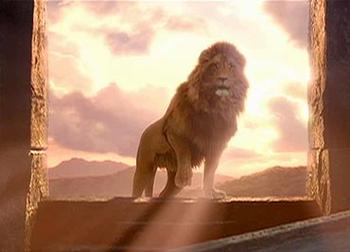
Is It Really Christmas, or Just Winter? What Narnia Teaches Us About the Awe of Christmas


,Thanks to my friend Adam Feldman for publishing this post Monday on his blog. 

Our family keeps a rather large collection of Christmas movies in the house,  all of which come out at this time of year.  From classics like Rudolph the Rednosed Reindeer and A Charlie Brown Christmas to my personal favorite A Christmas Story, even our Christmas tree reflects the season better when next to one of these flicks projected on the flat screen TV that hangs on the wall next to it.

A favorite Christmas movie in the Rainey house is The Chronicles of Narnia: The Lion, the Witch, and the Wardrobe, and at the request of our children, we have already seen this one three times this season.  Mom and Dad are happy to oblige this request, and not just because of the family entertainment value.  By God’s grace, we have already seen our oldest son meet Jesus, and we do all we can to constantly expose our two younger children to the Gospel.  Narnia is yet another way we can introduce spiritual themes into our children’s lives.

In fact, each time I think about the true meaning behind the metaphor, I find myself quite emotional. Yet this Christmas season, one line taken from the book struck me as particularly profound. And as I continue to ponder the true focal point of this season, I understand the tragedy of living a life reflected by the setting described by the faun Mr. Tumnus, in which it is "always winter, but never Christmas."

Of course, the tale is fictional, but C.S. Lewis intended his allegory to be exactly that from the start. In fact, his goal was to be able to read the entire story to a child, and simply say to the child at the end "Aslan is Christ," resulting in the child understanding the Gospel of Jesus Christ in its fullness. Consequently, the story rightly centers around the coming of the great Lion and the fulfillment of the prophetic freeing of Narnia.

As much as we enjoyed the film, movie screens can never depict with the same depth and precision what the human imagination can conceive with a book in hand. For example, when Mr. Beaver tells of the coming of Aslan, there was no possible way for movie makers to portray the following reaction by the children:

At the name of Aslan each one of the children felt something jump in its inside. Edmund felt a sensation of mysterious horror. Peter felt suddenly brave and adventurous. Susan felt as if some delicious smell or some delightful strain of music had just floated by her. And Lucy got the feeling you have when you wake up in the morning and realize that it is the beginning of the holidays or the beginning of summer.

In this part of his masterpiece, Lewis rightly captures the juxtaposed whole of what should permeate the heart of a Christ-follower--delight and adventure, excitement and horror--such are the appropriate extreme emotions in the presence of the King of Kings!

Yet as believers approach the coming Christmas season, I fear that our emotions might in fact be the opposite of that expressed by young Lucy. Rather than feeling the holidays have begun because of the name of Christ, we feel the obligatory pull to somehow recognize Christ because of the holidays. This not only puts the "cart before the horse," it dishonors Him who is to be adored above all things, and that at all times, not just at Christmas.

The lack of awe that many professing Christians have for the sovereign Christ is a year-round phenomenon, but is amplified at this time of year, as so many seem more impressed with the lights at Rockefeller Center than with the Light of the World--more fearful of the prospect of stolen gifts than of the reality of the Incarnate Word. Now is certainly the time of year to remember the warning of Mr. and Mrs. Beaver. Responding to Lucy's question of whether this Lion is "safe," Mr. Beaver asserts "if there's anyone who can appear before Aslan without their knees knocking, they're either braver than most or else,  just silly.”

Both book and movie also make clear that Christmas is inaugurated by the coming of Aslan, and until his coming, the White Witch has cast a spell over all of Narnia, so that it is "always winter, but never Christmas."  Sounds like a familiar context.

When Santa Claus gets more attention than our Sovereign God, that isn't Christmas, just winter!

When families merely tip their hats toward the Bethlehem manger on their way to open gifts and commit gluttony, never again to pick up a Bible and reflect deeply on how God Incarnate fulfills every redemptive promise that assures me of an eternity in His presence, that isn't Christmas, just winter!

Christmas is because Jesus is! In Narnia, Father Christmas makes his appearance in this fantasyland only after it is announced by the Beavers that "Aslan is on the move." Without the coming Son of God, there is nothing to celebrate. Conversely, because He has come, there is much to celebrate!

Stand at the manger. Meditate, as did Simeon, on the identity of this child. Tremble with fear at the One who is infinitely more than a baby. Remember with trepidation the words of Mr. Tumnus that "he isn't a tame lion." Moreover, remember that He isn't a baby anymore, but that Christmas, in remembering His first coming, be reminded of His promise to come again.

And in doing this, let your heart feel brave and adventurous. Let your soul delight in the sweetness of His presence that Scripture tells us is the fullness of a joy that cannot be duplicated by even the most tight-knit family. Most of all, let your excitement over the coming holiday be fueled by the salvific miracle of the incarnation. And know that the holidays have truly begun, not because of parties, gifts, or even the presence of family . . . .

. . . .but because "Aslan is on the move!"

Merry Christmas!

Sunday, December 16, 2012

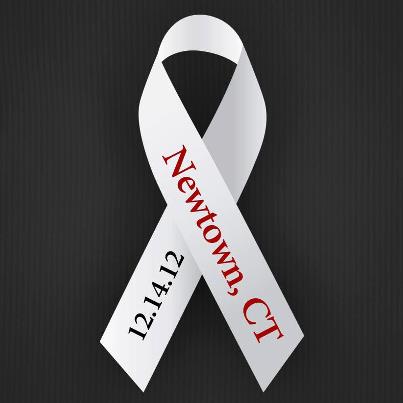
Christmas in Newtown, and in Your Town. Where is the Hope?

Like most parents, I've taken stock the past two days of the time I spend with each of my children.  And like  most, I'm unsatisfied.  In the wake of Friday's tragic shooting in Connecticut, many parents admit that they don't spend the time with their kids that they would prefer.  Still, there are a few dates that have become traditions to block out on my calendar.

Friday morning was just such a date.  Though it was my last day in the office for the year, I took an hour from that day to travel to my 7-year-old's elementary school for "Gingerbread House Day."  I make it a point to be part of this event, and build and decorate a great (and tasty!) gingerbread house with my son.  All of our kids have their own unique areas in which they excel, but when it comes to creativity, my Seth tops us all, and one of many evidences of this is the elaborate way in which he decorates a gingerbread house.  We had a great time, along with other parents, teachers, and administration.  The result was that by 10:30 AM the classroom was filled with gingerbread homes that made it look like a fantasy, winter wonderland.

After this event, I arrived back at the office shocked to find constant CNN news alerts and log-jammed social media, all reporting the unspeakable events that unfolded in Newtown, CT.  It was some time later before I reconstructed the timeline in my head and realized that 20 first-graders were losing their lives in the same time-frame that my first-grader was building a gingerbread house with his dad.  At that moment, the line between fantasy and reality was never drawn more clearly for me.  Even now as I think about it, my heart breaks for those families.

As a parent, I experienced--and am still experiencing--all the emotions that go with bearing witness to an unspeakable massacre like this; sadness at the loss of life, shock at youth taken from us too soon, anger at the pure evil it took to commit such atrocity, and anxiety about protecting my own children from such an event.  And of course, all of this happened in the middle of the "season of hope," but the more I've thought deeply about the events of this weekend, the more I realize that the "Christmas" most of our culture celebrates offers no hope at all.

On a subconscious level, many residents of Newtown know this too, as was evidenced by several families who are taking down their Christmas decorations in response to the shooting. In a sense, we should not only understand this way of processing grief, we should see a sense of appropriateness in it.  For most of us, the Christmas we celebrate isn't real.  Its a fantasy world in which we pretend to live each December.  Whether its pretending we have money we don't that results in consumer debt, seeking joy and happiness in lights and festivities that wain over just a few weeks, or feigning belief in a mythical fat man who will bring us presents, this "Christmas" is a dream that does nothing to bring us hope, especially in tragedy.

When you have lost a child at this time of year, there is nothing hopeful about a beautifully wrapped gift that will never be opened.  And in the wake of tragedy, the facade of tinsel, lights, and eight tiny reindeer fades quickly, and reveals our western, European-imported, American-materialized "holiday" for what it really is; a temporary month-long escape from the real world that provides zero hope.

If you want hope, you have to look to the real Christmas! Trouble is, the real Christmas doesn't cover up our sin with shiny gift wrap.  It exposes it and crucifies it.   My friend Russ Moore wrote a profound piece yesterday reminding us that the context of the first Christmas actually looked more like the scene in Newtown on Friday than the fantasy world we live in every December. King Herrod's murderous rage resulted in a blood-soaked Bethlehem, and while Jesus escaped death at this early moment in his life, the world into which He came was not safe.  The hope of the real Christmas is that Jesus willfully entered human history to personally experience the very fallen world from which we try to escape, and to redeem us from the real cause of it all: ourselves!

Such is another reason we are so turned-off by the real Christmas.  Rather than dress us up in red and green, it reveals our true nature, and our deepest need.  During moments like this, its much easier to stare down gun manufacturers and mental health professionals than it is to look in the mirror.  But blaming guns for this tragedy is as  ridiculous as the tendency of some fundamentalist preachers to blame Budweiser for every drunk driving accident.  Similarly, assuming every act of evil is a mental health problem is to deny the reality of demonic influence.  It is understandable why so many in our modern world would reject the existence of these spiritual realities, but followers of Jesus have no excuse, and if you can witness events like those that transpired this weekend and still not believe in demon possession, something is seriously wrong with you.  The problem is spiritual, and located precisely in the human heart; Adam Lanza's, yours, and mine.

Jesus' coming reminds us of how deeply we all stand in need of redemption.  The fake Christmas fairy tale our culture has invented covers up that nature.  But the Gospel presented in the real Christmas story reveals that each of us, apart from the grace of God, is capable of the very kind of atrocity that was committed this past Friday.  Its easier to believe in hell when you see something like this.  Its harder to fathom that you and I deserve it as well; that the same sin-sickness that motivated the perpetrator of this massacre resides in each of our hearts.  Societal sin is easy to believe in.  Corporate sin makes a good target for our rage.  But the truth of the Gospel is that you, personally, suck just as badly, and that's a hard pill to swallow.

The real Christmas doesn't make things look prettier than they really are for a month.  Instead, it redeems the ugly, the repulsive, and the sinful, and makes it truly beautiful for eternity.  Jesus came into a world of violence, walked among the worst of our sin for 33 years, and then willfully gave His life, bearing the wrath of God in our place, and giving us the hope of being fully restored to the people God created us to be.

Christmas is the incarnation of the God-man, and is thus the inauguration of the eventual elimination of the very evil that brings us the kind of facade-destroying sorrow that has been experienced in Connecticut this weekend.  Justice will be served, wrong will be righted, and people from every nation, tribe and tongue redeemed because of the real Christmas  The best thing followers of Jesus can do is ditch the fairy tale, and embrace the reality of Jesus.

So let's have a conversation about the state of mental health in this country.  Let's talk openly about how to keep firearms out of the hands of mentally unstable people.  Those are not illegitimate subjects of discussion.  But let's not pretend that treatment of the symptoms will cure the disease.  And as followers of Jesus, let's refuse to play the worldly game of wrapping our sin up in shiny paper every December and pretending that it doesn't exist.

The deaths of these precious children, their teachers, and principal have destroyed "Christmas" as we know it--the "Christmas" most of us have invented and celebrate each year is gone, along with the false hope it provides.  Now, its time to turn to the real thing and offer Him to the world.

In memory of those slain at Sandy Hook Elementary School:

Charlotte Bacon, age 6

Daniel Barden, age 7

Rachel Davino,  age 29

Olivia Engel, age 6

Josephine Gay, age 7

Ana Marquez-Greene, age 6

Dylan Hockley, age 6

Dawn Hochsprung,  age 47

Madeleine F. Hsu, age 6

Catherine V. Hubbard, age 6

Chase Kowalski, age 7

Jesse Lewis, age 6

James Mattioli, age 6

Grace McDonnell, age 7

Anne Marie Murphy,  age 52

Emilie Parker, age 6

Jack Pinto, age 6

Noah Pozner, age 6

Caroline Previdi, age 6

Jessica Rekos, age 6

Avielle Richman, age 6

Lauren Rousseau,  age 30

Mary Sherlach, age 56

Victoria Soto, age 27

Benjamin Wheeler, age 6

Allison Wyatt, age 6

Wednesday, December 05, 2012

Building Relationships Like Jesus: a Review of "Bold as Love"


 Over the past five years or so, two men have influenced my understanding of missions and cultural engagement.  One of those men is long-dead, the other still alive and kicking, and living what he preaches in a big time way!

The dead guy of which I speak is Abraham Kuyper.  Kuyper was a 19th and early 20th century Dutch Reformed theologian and pastor, but was also a politician, journalist and statesman who served as Prime Minister of the Netherlands from 1901 to 1905.  His influence even after his death was long felt among the Dutch, and his ideas about "sphere sovereignty" forwarded the notion that education, business, the press, the arts, and science are areas created by God with their own unique purpose of bringing glory to Him, and thus has its own created integrity.  

Practically applied, "sphere sovereignty" means that every sector of society, like the human beings which make up those sectors, is created in the image and likeness of God, and simultaneously fallen in sin.  Thus, Jesus is determined, not only to bring individuals to salvation, but to redeem and proclaim His Lordship over every area and domain of society.  Reading and grasping these concepts over the past five years has revolutionized the way I view missions and how the Great Commission mandate is to be accomplished.  In particular, it was Kuyper's book "Wisdom and Wonder: Common Grace in Science and Art" that turned my world upside down!

One guy who is living out this vision is my friend Bob Roberts, and Bob has just written a new book entitled "Bold As Love."  The book recounts many of Bob's own experiences in seeking to engage the world, and in particular, those in the world who adhere to faiths other than Christianity.  I've spoken much recently to my own efforts at engaging, in particular, Muslim peoples, who have in turn invited me into their lives, and Bob has been a great teacher and encourager during this period.

The primary thesis of the book is, quite simply, that Jesus meant what He said when He called us to love our neighbor.  If Christians are to faithfully engage the world, such action will also mean engagement with the faiths of the world, and the people who adhere to them--people that we believe Jesus died to save.  Apologetics are important, as is the accurate and faithful proclamation of our message.  But these mean very little unless we are willing to do what Jesus did--incarnate ourselves among people and live with them in friendship.  Bob's book teaches the reader how to do this using the best educational approach I know--example!

This isn't a book that encourages abandonment of faith.  It is about living your faith in a way that vindicates the truth of its promise to redeem.  Its a book about building relationships in the face of fear.  Its a book about listening to the hearts of those who believer differently so we can understand and walk in friendship. 

The evangelical church in the west is--on this issue--at a very critical crossroad.  The United States is more diverse than it has ever been in our history, and we are surrounded by people from nearly every walk of life, and by adherents to nearly every religion that exists in the world.  In short, God has brought the nations to our front door, and we can only react in one of two ways: in fear, or in faith.  Bob illustrates this contrast in vivid detail as he recounts how people at his own church reacted to their attempts at building bridges with the Muslim community:

When we began to have Muslims come to our church, many of our members were fearful that we would be blown up.  Some left, most stayed, and all received according to what they sowed.  Those who sowed fear still live in fear and want others to live in fear.  Those who sowed bold love have built friendships and serve as bridges for others to cross over.

I believe in the message of the Bible and thus, don't believe God has given us a spirit of fear. (2 Timothy 1:7)  So be brave in your engagement.  Be bold in your love.  Honor Jesus in the way that you honor and befriend those He created in His image, and whom He died to save.  And if you are looking for greater encouragement to do so, or some practical examples of what this looks like, pick up my friend Bob's new book, Bold as Love.

Friday, November 30, 2012

Truth in Dialogue: A Model for Evangelical Conversation with Other Faiths

My new friend Emre Celik,, President of the Rumi Forum in Washington, D.C.

Last night, I was given the honor of addressing the 5th annual Dialogue Dinner sponsored by the Maryland Turkish American Inhabitants.  This annual event is attended by people from a multiplicity of faiths and background in Maryland, so the room was filled with business leaders, academics, politicians, and others who have worked closely with this organization over the years.  My relationship with these dear people began a little over a year ago, as an attempt by both sides for Christians and Muslims in central Maryland to understand more about each other.

Since our initial meeting, a group of pastors from our network of churches was invited to their country, and we toured the Republic of Turkey together for nine days.  I've written more about that trip here, and was asked last night to speak to a diverse audience about our experiences there.

So there I was, a follower of Jesus, an evangelical preacher of the Gospel, and a regional leader of local and global missions, standing in front of a room full of mainline Protestants, Muslims, secularists, state political leaders, and other public servants.   What on earth do you say in a context like that?

I didn't have all the answers, and I still don't.  However, I'm happy that the evening went very, very well.  I was afforded the opportunity in this environment to share my faith, as well as talk about how adherents to various faiths and no faith can live together in the same nation.  This is the essence of religious freedom, and the perfect environment to ensure that conversion, if it happens, is genuine and no coerced.  I was delighted afterwards at the positive reaction of our Muslim friends, but even more so, I was encouraged by fellow pastors who confirmed my  accurate representation what our churches believe.

I continue to learn much through this continuing conversation, and I'm grateful to my Muslim friends for giving me the opportunity to stretch myself.  I'm still an evangelical follower of Jesus who would like nothing more than to see the whole world recognize Him as God very God, King of Kings and Lord of Lords.  But even as I share my faith, I do it realizing that these folks are not my "projects."  They are, and are still becoming very dear friends.  

As we continue to walk together, three dominant principles have emerged that I think have helped our conversation.

1. Don't compromise your faith.  For one thing, if we all did that, the whole "peace through understanding and dialogue" movement would be a moot point.  The fact is that we have some very, very deep differences; differences in which eternity hangs in the balance.  But what I've found in this experience is that our Muslim friends have much more respect for you if you are simply honest about what you believe.  Just be sure when that truth comes out that it is accompanied by the "gentleness and respect" 1 Peter 3:15 demands.

2. Seek to understand the real distinctions.  Don't argue over the fake ones.  I spoke last night toward our national propensity to see Islam as an inherently violent faith, and how that propensity creates a dangerous myopia that can actually stoke more violence.  Let there be no mistake; our differences center around the person and identity of Jesus, not terrorism. Paul tells us in 1 Corinthians 13 that genuine love assumes the best (see verse 7), which means that when we begin a conversation automatically assuming our Muslim friend is exactly what FOX News says he/she is, we never really get to know that person.  When it comes to people of other faiths, spend time with them.  Live life with them.  Assume you don't understand where they are coming from, ask them questions, and LISTEN.

3. Commit to a friendship that is unconditional.  I love the way my friend Bob Roberts expresses this sentiment when he says "don't serve to covert, but serve because you have been converted."  I have family members who do not know Jesus, yet I continue to take their phone calls, visit them at the holidays, and love them because of who they are.  Likewise, those who follow other faiths are very much a part of our larger human "family."  No, they are not "brothers and sisters in Christ," but we are nonetheless tied together by our common humanity.  They are created in God's own image and likeness, and we should love them unconditionally.  That kind of love and acceptance is the ideal atmosphere in which genuine friendships can be developed, and our faith can be shared.

I'm still far from having all the answers on this issue, as the speech transcript below will no doubt reveal.  But my hope is that the wider body of Christ can produce more models for reaching out to our neighbors in other faiths, and that in the process we can learn to honor Jesus, and each other.

Speech to the Maryland Turkish American Inhabitants
“Peace through Education and Dialogue”
Thursday, November 29, 2012, Pikesville Hilton Hotel, Baltimore
Joel O. Rainey, Ph.D.

            It is truly a pleasure to be standing in front of you tonight, and to share some recent experiences that our group of pastors had in the Republic of Turkey with our new friends.  And tonight, I think it is very important that I be clear how much I mean that.

            An interfaith dinner is a strange place to find an Evangelical Christian.  For anyone in the room who follows professional football, it’s a little like finding a Pittsburgh Steelers fan at M&T Bank Stadium wearing purple, but I am brave enough to stand in this room tonight and admit to you, both that I am, and I have. So I am very accustomed to being in places you wouldn’t expect me to be.  I trust that this admission won't result in my being tarred and feathered after this event.  After all, your team has already done enough damage to mine this season.

            But I do stand here as an evangelical Christian, who leads a network of more than 60 evangelical churches, and typically, we just aren’t the sort to be found at events like this.  And I think my presence speaks well of our Turkish friends, and their high capacity for developing unlikely relationships. They have modeled for me what it means for two people of very different faiths to walk together, and I am very grateful to them for their example, and for their friendship.

            It was through our new friends that I first heard the name Fetullah Gulen.  The trip I and our pastors took two months ago was largely for the purpose of seeing with our own eyes how Mr. Gulen’s influence is shaping not only Turkey, but the wider Muslim world for the better, and so my curiosity was raised even more about this man.  Who is he?  And why would he want those who follow his example to reach out to people like me?   

            I spent a good deal of time reading Gulen’s writings, and I was particularly interested in his theology.  After all, I am a pastor and those tend to be the circles in which I walk.  And what I discovered is that from the perspective of belief, Fetullah Gulen is very much an “old school” Sunni Muslim preacher.  Many of his writings aggressively defend the Koran as the written Word of God.  I discovered a man who is serious about his own faith, and who believes deeply and profoundly in the following words from the Koran; “Say he is Allah, the one and only.  Allah, the eternal, absolute.  He begets not, nor is He begotten.” [Surah 112]  And initially, I found it strange that a man who believes such things would want to reach out to me.  I serve a network of churches that believes God not only had a Son, but that the ultimate way in which He has demonstrated His love for the world—including everyone in this room--is by giving that Son to die and bear the wrath of God as our substitute so that we can be redeemed.  But as I continued to research Mr. Gulen, I discovered a man who is anxious to reach out to people of other faiths, regardless of significant differences, and I have gained a profound respect for his ability to balance strong conviction with a desire to promote peace among all people.

            I love this quote from his book Toward a Global Civilization of Love and Tolerance, “With the blessings and beneficence of God, we are going to do our best to help this breeze of tolerance and dialogue to continue blowing.” Among those who have answered Gulen’s call to this vision are those who host us tonight, and they are people who I am honored to call friends. 

These friends recently hosted a group of our pastors for a nine day visit to Turkey, and because of their hospitality, we were able to witness first-hand the good that is being done by our friends in this part of the world.  We saw things transpiring in that part of the world that I honestly have never read about in the Baltimore Sun, or seen on CNN.  I understand that it takes bad news to sell papers and increase Nielsen ratings, but the good things we witnessed there stand in great contrast to how most Americans perceive the so-called “Muslim world.” 

Among the great things we saw were Gulen-inspired institutions of higher learning.  In Konya, home of the 13th century philosopher Rumi, we visited Mevlana University, where students from all over the world come to study education, law, medicine, engineering and business.   In Sanliurfa, less than 30 miles from the violence that has recently occurred across the Syrian border, our pastors and I spent the day in a place where Turkish, Arabs, Kurdish, Jews and Christians have lived in peace for 1000 years.  One young pharmacist who lives there and is part of this movement told me “I want to take what we have done in this city, and spread peace across the border and throughout this part of the world.  I want my city to be the starting gate for peace!”  I love his heart, and I’m hopeful for a world where that heart is shared by all of us.

It was Istanbul where our pastors were introduced to an organization called Kimse Yok Mu, a non-profit disaster relief organization that since its inception in 2002 has brought help and relief to more than 60 countries.  We were also introduced to the good people at the Journalists and Writers Foundation, an organization that provides six very distinct platforms for dialogue and the promotion of peace among adherents to the world’s religions.

One of the most impressive things we learned about was their food.  I’m more than just an evangelical Christian, I’m also a Baptist, and we Baptists place a high value on food!  And theirs was amazing!  I have never tasted better lamb, and ever since returning to the states I’ve been on a seemingly hopeless search for mirash, which is a form of ice cream that has left me completely dissatisfied with what my local grocery store offers.  And of course, there is the baklava, which makes me believe our Turkish friends have stumbled onto the recipe for the manna that God provided Moses and his followers in the Egyptian wilderness.  It was exquisite!

Of course, the real benefit of a meal is the opportunity to get to know those with whom you are dining.  My primary role in my work is to be  a mobilizer of churches for intercultural work here in the Baltimore-Washington region, and around the world.  This means that I’ve had the opportunity to be in the company of people from almost every nation and tribe.  But I can tell you that when it comes to hospitality and graciousness, my Turkish friends cannot be matched!  By hosting us in their home country, they have given us an incredible gift, and an experience that I think has changed all of us for the better.  As I reflect on what we have learned from each other thus far, there are some lessons that my friends taught me on this trip that I want to share with you tonight.

The first lesson is this; the movement we witnessed in Turkey, while appearing on the surface to be a “young man’s movement,” actually embodies the power of cross-generational effort.  Many young people have responded to Fetullah Gulen’s call to service, but while in Turkey we also observed older generations responding to that young passion for world-change with financial support, and other resources necessary to accomplish their goals.  It was not uncommon for us to see this kind of cooperation carried out by three or four generations of Turkish people, all of whom were committed to these goals of peace and prosperity for their nation.

Second, these are people who speak quickly, boldly, and loudly to the violent elements of their faith, and in doing so, they teach all of us to speak against the violent tendencies within our own spheres of influence.  Our group landed in Istanbul less than a week after the attacks on the U.S. Embassy in Benghazi, and our friends were quick to condemn the violence.  And as we have discussed this and other issues, I have discovered that our friends genuinely abhor violence committed in the name of their faith.  It is their strong opposition to these elements that has challenged this Christian to examine my own responses to violence that is sometimes committed in the name of Jesus.

When most of what we see of Islam in the media consists of images like masked men shooting a young girl for no more than simply wanting an education, the temptation is to see such violence as inherent in Islam itself.  But when we look at a picture like that and simply conclude “That is Islam,” we are too quickly forgetting that extremists of every sort and kind often appeal to their faith of origin as a source of authority.  I am a native southerner, and have examples of such violence in my own family tree: individuals who also intimidated minorities and the weak, and did so while hiding behind a white mask, and with a burning cross in the background.  As a follower of Jesus, I’m thankful that no one pointed at that picture and said “There is Christianity!”  And I’m grateful to be in agreement with Muslim friends who believe with me that neither of our religions should be defined by the cowards among us who would commit such atrocity, nor should we tolerate those within our own ranks who seek to do harm to others created in God’s own image and likeness.

Third, the dialogue they advocate is the very kind of “public square” discourse that makes for a healthy society.  As Americans, we rightly resist what Evangelical social critic Os Guinness calls a “sacred square,” wherein our social standards and body of law are based on one specific religion.  In a pluralistic and democratic society, the sacred square is impossible to maintain peacefully.  But while we are wise to resist “theocracy” as more progressive pundits have called it, neither can we have what Guinness calls a “naked square.”  Somehow, many of us in the U.S. have developed the idea that religious conviction isn’t just personal, but private, and therefore should not be an appropriate subject of national discussion.  The problem with that assumption is that faith touches the deepest and most meaningful part of who we are as human beings.  From a personal perspective, my relationship with Jesus Christ isn’t limited to what I do on Sunday.  It defines the totality of who I am, so if I can’t talk to you about my faith, you can’t really get to know me. Similarly, if a person sincere in any faith isn’t allowed to share that faith because of perceived cultural taboo, we never get to truly know and understand each other. 

While abroad, I experienced people who are quick to speak of their faith in God, who are willing to hear about our faith, and wrestle with us through the implications of our differences in a way that is respectful of each other.  This is the kind of atmosphere that illustrates well what Christian social observers call a “civil public square,” and in an ironic way, I was delighted to find its full expression in a nation whose predominant religious affiliation is Islam.  If done with respect for the image of God stamped on all of us, talking about our differences, and even urging each other to consider the truth of our respective faiths out of concern for each other can build a strong, healthy relationship of the sort we need so badly in our own country. After our visit, I’m convinced that our Turkish friends are highly qualified by their own experience to teach us how to have precisely this kind of conversation. 

Our group learned much while abroad with our new friends, and we look forward to learning even more as we continue to walk together.  We look forward to engaging with them in matters of common interest, and to building the sort of genuine friendship that demonstrates our common humanity in powerful ways.  If invited by these precious people to visit their country with them, I urge you to accept the invitation.  Clear your calendar and go!   And when you do, be prepared for the world to open to you in ways you may not have thought possible.  I’d like to thank my friends at MARTI for allowing me to share our experiences, and thanks to all of you for being here tonight.